Wild vs. Captive Bred
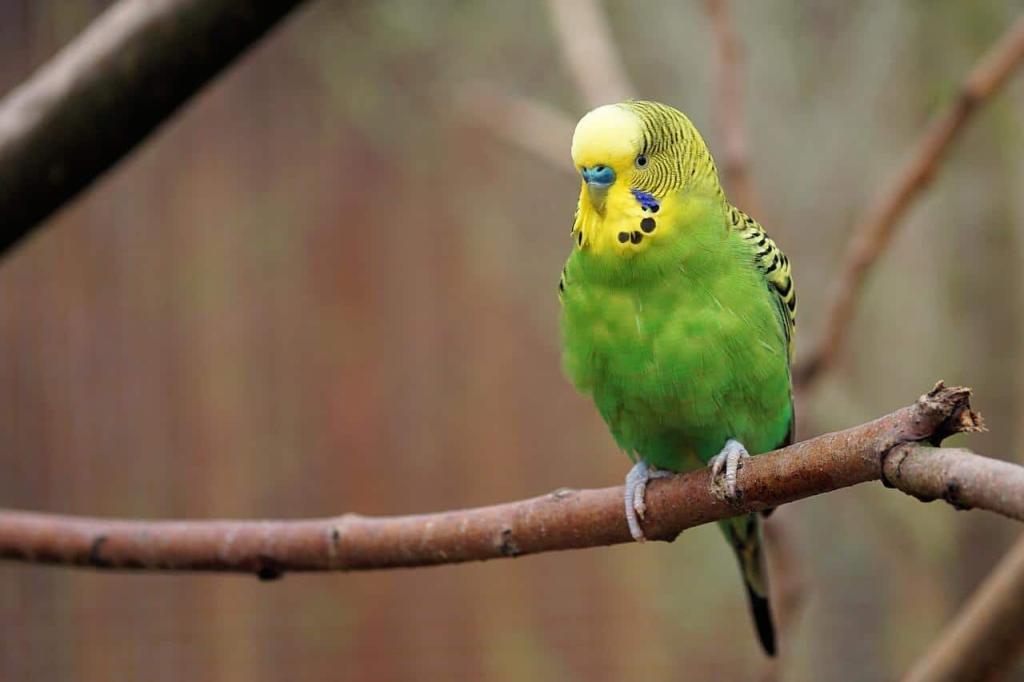
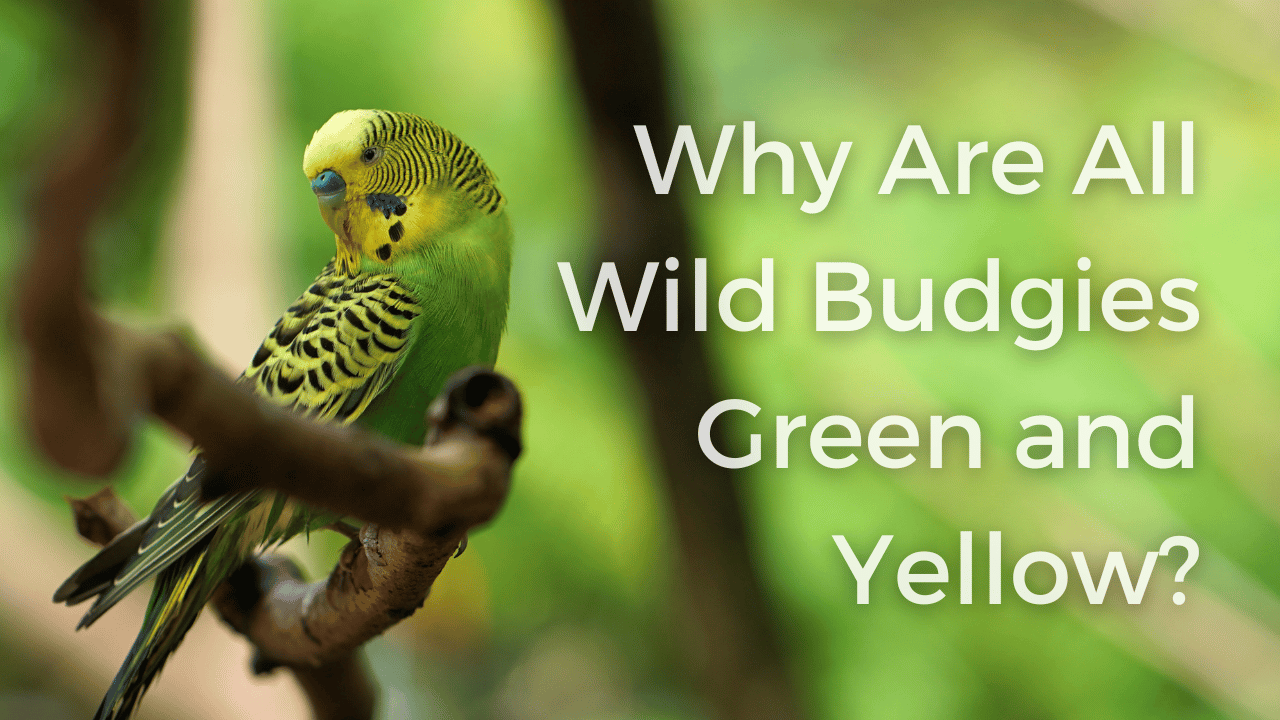
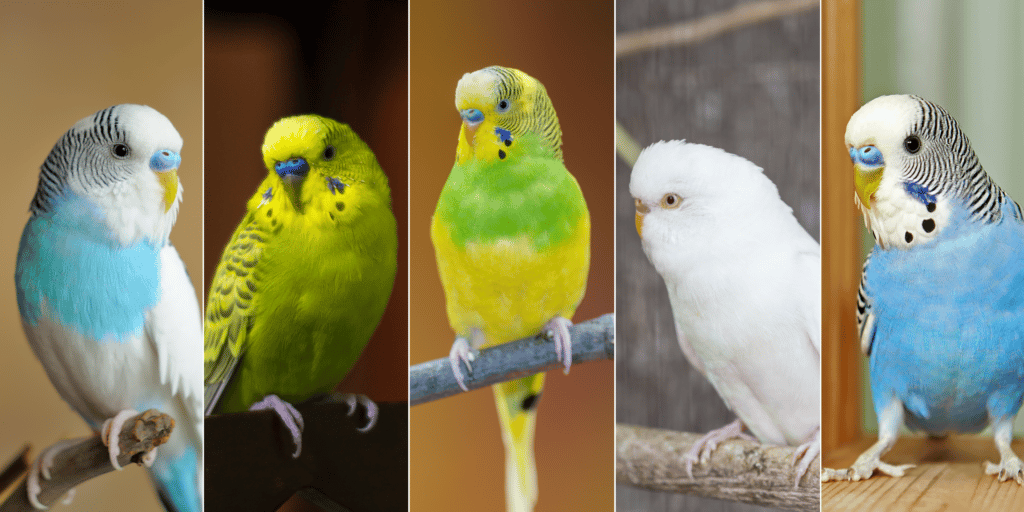
In the wild, nearly all budgies are green and yellow with black barring. However, our pet budgies come in all shades of blue, green, white, and yellow. So how did these other colors come about? The answer is genetics! By understanding budgie genetics and intentionally pairing birds together, captive breeding has produced budgies in a wide variety of colors starting from the wild type dark green and yellow budgies.

It's All In Their Genes!
There are multiple genes which determine the color of each budgie but all follow a similar dynamic. Let’s walk through some fundamentals together.
The versions of the genes that produce the dark green and yellow base color are “dominant” meaning that even when there is only one copy of that version, it will dictate the color of the bird even when a different version of that gene is present. The blue color and white base is a lack of yellow coloration and this version of the gene is “recessive” meaning it will only dictate the color of the bird if there is no dominant version overriding it. This means if there is even one copy of the yellow color gene in the bird, the bird will be yellow because that version of the gene is dominant. In order to ensure all of the offspring maintain the recessive color, two birds carrying only the recessive coloration need to be paired.

But Why Do We Not See Any?
In the wild, almost all budgies are the standard dark green and yellow, Since this is also the dominant color, the vast majority of budgie chicks will also be this color. Only in the event that a chick does not receive a copy of the dominant gene from a parent will it result in the recessive coloration. The statistical possibility of this is quite low when the majority of the birds are dark green and yellow.
These colorations, unfortunately, are not advantageous for the bird. Because of their different color, they are easier to pick out of the crowd by predators and are subject to increased predation, preventing them from passing on their genes to the next generation.
So Why Are Captive Budgies So Colorful?
In captivity, budgie breeders have been carefully tracking budgie genetics since the mid-1800s when budgies were first brought to Europe. Aviculturists kept careful track of individuals and pairings, mapping out which colorations are dominant and which are recessive so that they could carefully pair birds to maintain and create new color variations and genetic lines.
Because of this strong understanding of budgie genetics and intentional breeding, we are able to produce the wide variety of budgie color variations in captivity, far beyond what would ever naturally occur in the wild.
There’s so much more to budgies than meets the eye, and color is only scratching the surface. For more deep dives on everything budgie–from perches to toys to lifespan–check out our other articles at The Budgie Academy! And don’t forget to follow us on social media to stay in the loop.
References
GrrlScientist. (2007). The physics of structural plumage colours in birds [Blog post]. Retrieved from https://grrlscientist.medium.com/the-physics-of-structural-plumage-colours-in-birds-grrlscientist-6c608a7476c8
Parker, A. R. (2002). Fluorescence of yellow budgerigars. Science, 296(5568), 655. https://doi.org/10.1126/science.296.5568.655b.
Riedler, R., Pesme, C., Druzik, J., Gleeson, M., & Pearlstein, E. (2014). A review of color-producing mechanisms in feathers and their influence on preventive conservation strategies. Journal of the American Institute for Conservation, 53(1), 44-65. https://doi.org/10.1179/1945233013Y.0000000020.
Written by Isabel Frabotta
Isabel holds a B.S. in Animal Science from Cornell University, where she studied physiology, nutrition, endocrinology and genetics. She is a writer and graphic designer who uses both to improve education around animal welfare and care.
Edited by Dr. Amy Zhao, PhD.