Free live masterclass: Why your budgie plucks — and what to do  Save my seat →

Let's chat

This is the support your budgie has been asking you for.

Your budgie is telling you what they need, but it can be hard to understand what they’re asking for when no one taught you how to speak budgie. Together, we’ll decode what they’re really saying and get them the support they need.

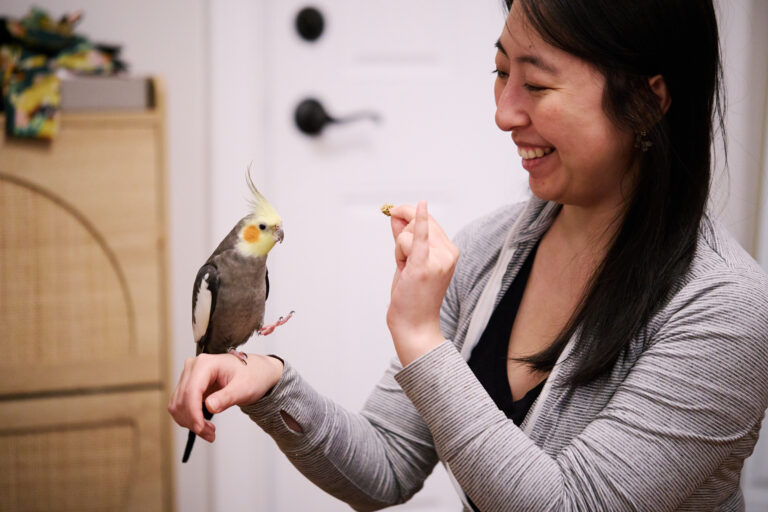
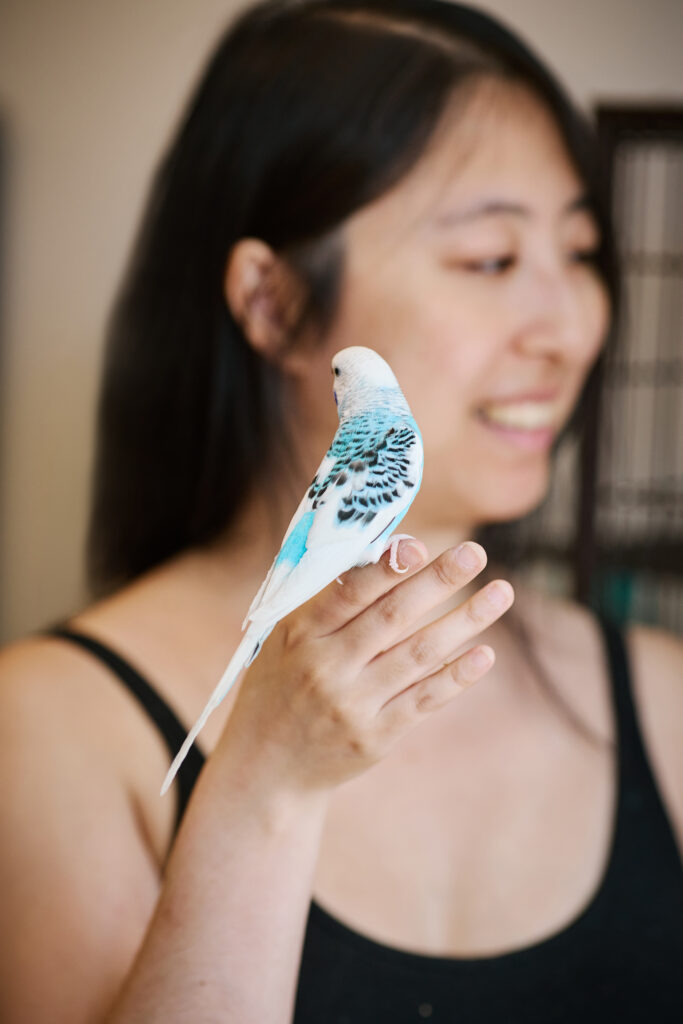
Dr. Amy Zhao with her budgies
How to speak budgie

Here’s what your budgie is really trying to tell you.

Our budgies have a lot to say, and I don’t mean just happily chattering the day away. Everything our budgies do is telling us something, so let’s have a listen together.

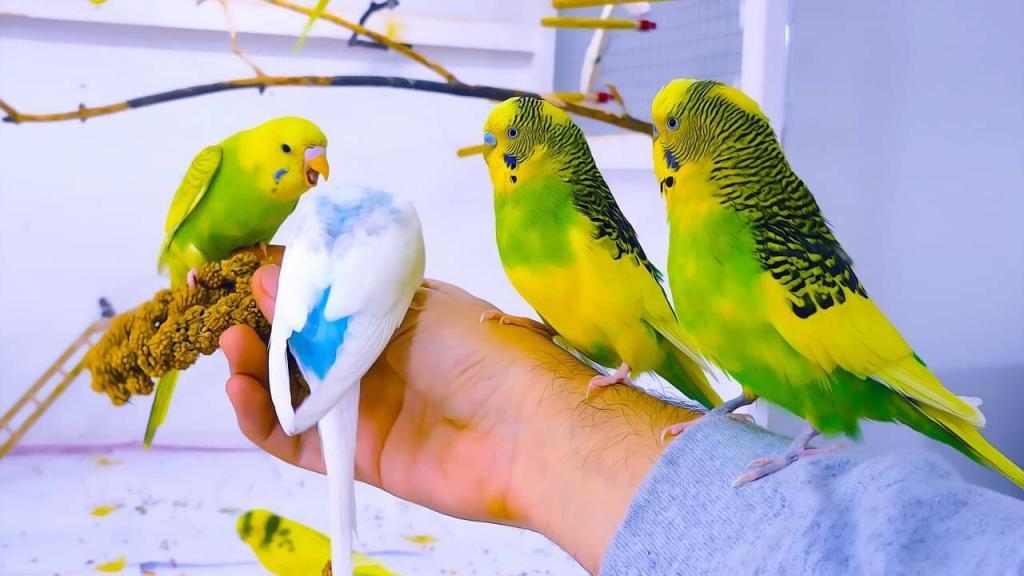
A room with budgies
Find out what your budgie is trying to tell you.
Click on a number to find out what these budgies are saying.

Tell me about your budgie.

Pick the behavior you’re seeing, and I’ll help you understand what your budgie may be trying to tell you.

What's usually underneath it

Chronic egg laying

Chronic egg laying is more than a quirky habit — it’s a sign that your budgie’s body is being pushed into breeding mode again and again. This puts her in repeated danger and can put her at risk for severe bone loss and shorten her lifespan. Budgies are very responsive to environmental triggers, so once we identify those, we can craft a plan to return her back to her normal non-breeding self.

What's usually underneath it

Feather loss and damage

Feather loss can happen for many reasons, from molting to stress, plucking/barbering, medical issues, hormones, or environmental triggers. The key is figuring out whether this is a normal change or your budgie’s body telling you something has been needing attention for a long time. By looking at their exact feather pattern, we can identify potential causes and come up with a plan of action that actually addresses the root cause.

What's usually underneath it

Biting and hand aggression

Biting is communication, not attitude. When a budgie starts biting, they’re usually saying they feel scared, pressured, hormonal, overstimulated, territorial, or unheard. The way forward starts with understanding what happens right before the bite, then changing things so that biting is no longer necessary from your budgie’s perspective.

What's usually underneath it

Fear of hands

A budgie who is afraid of hands is not being stubborn — they’re protecting themself from something that feels threatening because they don’t have enough information on how to interact with you. If you learn to speak their language and tell them how they can interact with you, you’ll suddenly find a budgie who will not just step up onto your hand, but interact with you in all sorts of ways.

What's usually underneath it

Excessive screaming

Screaming is not for fun, it’s for function! Screaming is most commonly an accidentally established communication tool to get their needs met, or can be a result of overly high hormones. Once we figure out which it is, we can create a new routine, new communication, and resolve hormones to turn daily screeching into pleasant budgie chatter.

What's usually underneath it

Seed-only diet

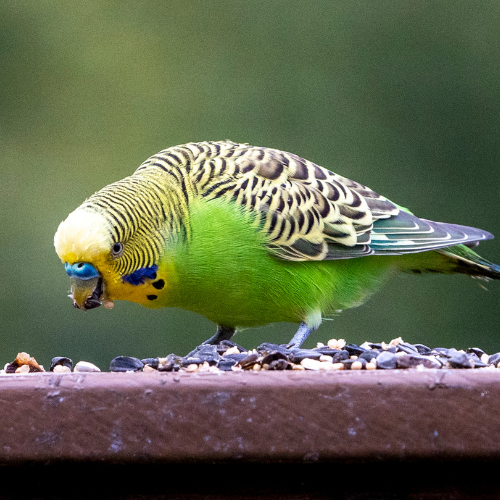
Seed is familiar, calorie-dense, and yummy! However, a budgie diet needs more than just seed to complete their list of essential nutrients. A successful transition is rarely about “just offering vegetables” — it’s about using your budgie’s learning style, flock instincts, routine, and preferences to make new foods feel safe enough to try.

What's usually underneath it

Year-round hormonal behaviour

If your budgie seems hormonal all the time, something in their life may be constantly telling their body it’s breeding season. Budgies are opportunistic breeders, so they will breed anytime the signals are present. Housing, diet, food abundance, nesting cues, favorite objects, handling, and household routines can all play a role. To be successful bringing their hormones back down to normal, we need to identify all the specific ways the triggers are happening in the home and choose safer alternatives instead.

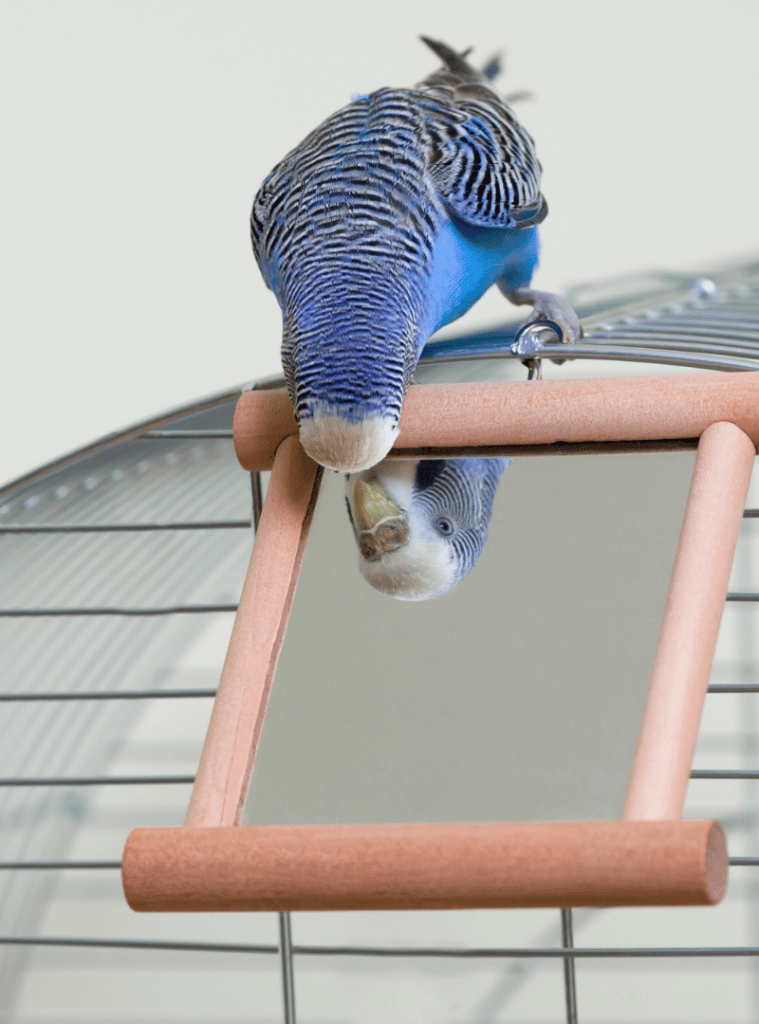
budgie parakeet with mirror
What's usually underneath it

Aggression between birds

Budgie conflict can come from hormones, resource guarding, personality clashes, overcrowding, fear, or a setup that doesn’t give each bird enough choice and space. Before deciding whether they “just don’t get along,” it’s important to look at what they’re fighting over, when it happens, and whether the environment is setting them up to fail.

If you can't name it yet

It’s all connected

When everything feels connected — diet, biting, screaming, hormones, fear, cage setup — it can be hard to know what to fix first. Don’t worry! Most of these things are actually all connected in different ways, which means you don’t have to solve nine separate problems at once. Once we understand what your budgie is responding to, we can usually find the first few changes that will make the biggest difference.

Choose your series

Get the level of support your budgie actually needs.

Whether you need a single focused plan or deeper support through a complex behavior change, each series is designed to meet you where you are and help you move forward with clarity.

Start here

Clarity Call

Best for: you want to understand what’s really going on with your budgie — and exactly what to do next.

Behavior Breakthrough

Best for: your budgie has behavior challenges you’re ready to solve at the root.

from $997
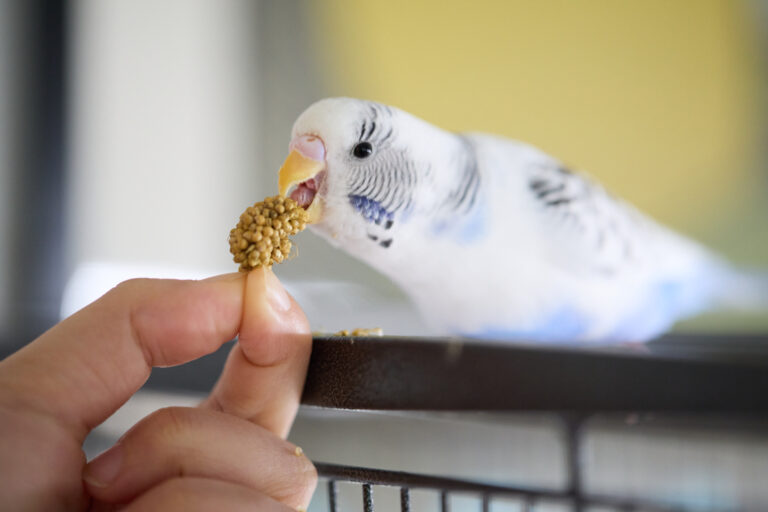
Bino eating millet

Signature Series

Best for: you want to give your budgie the best possible start in life.

from $1,997

Transformation Series

Best for: a multi-bird home with complex, layered problems no one else has been able to solve.

from $3,997

A look inside

What working with me is like.

Real sessions, real birds, real progress.

“I was having trouble with my rescue budgie Hue, who was biting and quite fearful. He didn’t want to interact with me at all. I was also struggling with hormonal behaviours in my other budgie Pixel. Doing the three-month training with Amy completely turned everything around. I was amazed at how the change in diet and specific training techniques made so much difference, and so quickly. Both the birds are much happier now, and Hue is clearly much more relaxed and doesn’t bite me anymore! He is much more interactive, and Pixel is better behaved too. I’m continuing to use the techniques I learned with Amy — they have changed my life as a budgie owner.”

Denise

Hue & Pixel’s human · Behavior Breakthrough

“Dr. Zhao is an experienced expert in parrot care in general and budgies in particular. She is wonderful to work with and is a champion for both budgies and their owners. She meets parrot owners where they are without judgement. She presents the latest science to parrot owners to the benefit of all.”

Michael Staples

Cisco & a flock of 8’s human · Signature Series

Still not sure what’s right?

Tell me a bit about your bird and what’s going on, and I’ll point you to the right place to start.

Scroll to Top